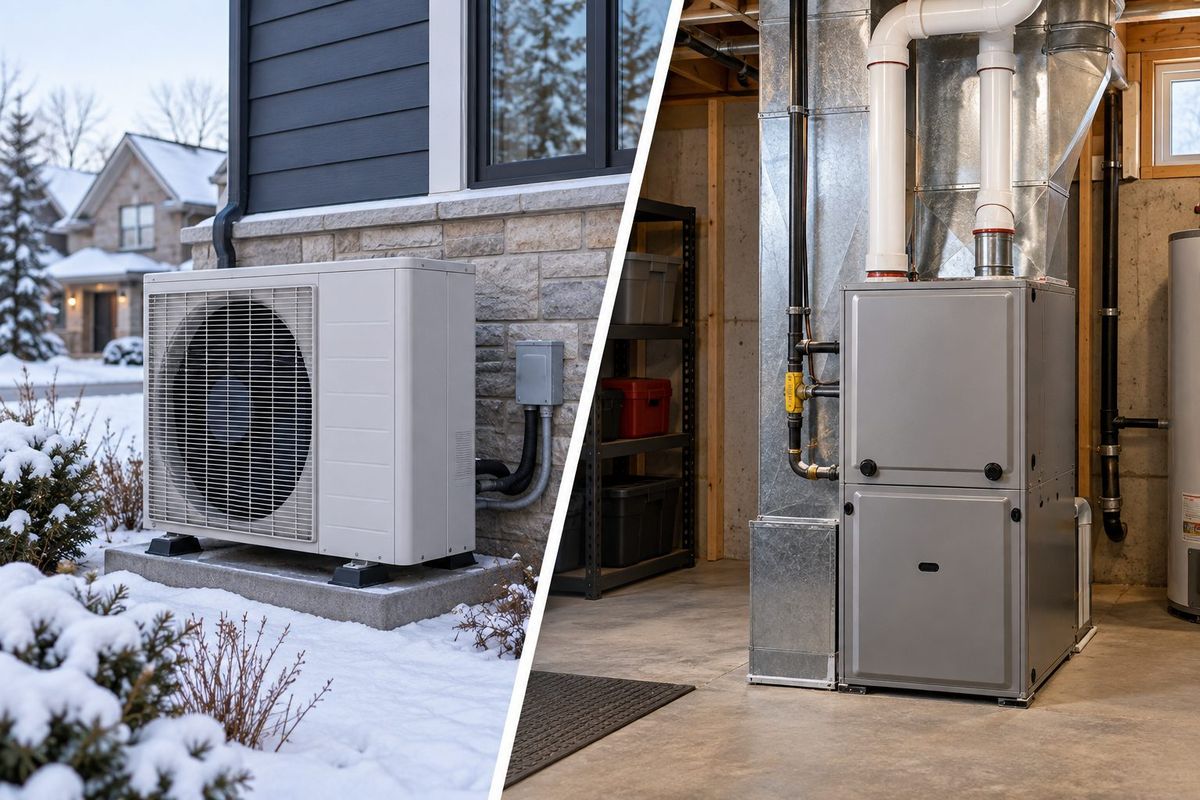
If you are replacing an aging heating system in Ontario, you no longer have to automatically replace a furnace with another furnace. Heat pumps are a serious alternative, but neither option is automatically better for every house.
How the systems work
A furnace creates heat, typically by burning natural gas or using electricity. An air-source heat pump moves heat: in winter it transfers thermal energy from outdoor air into the home, and in summer it reverses to provide cooling.
Natural Resources Canada’s heat-pump guidance explains how these systems provide both heating and cooling.
Potential furnace advantages
- Familiar technology
- Strong output during very cold weather
- Compatibility with existing ducts
- Straightforward replacement where a furnace is already installed
A homeowner with a newer furnace does not necessarily need to discard it to add a heat pump.
Potential heat-pump advantages
- Heating and cooling from one system
- High energy efficiency
- Reduced reliance on fossil-fuel heating
- Potential integration with an existing furnace
- Strong performance from modern cold-climate models
Ontario winter performance
Heat-pump performance changes with outdoor temperature. Modern cold-climate systems operate at low temperatures, but supplementary heating may still be part of a properly designed system. The right choice depends on the home’s heating load and the specific equipment.
Consider a hybrid system
The decision does not have to be heat pump or furnace. A hybrid system can use a heat pump for heating and cooling while retaining a furnace as supplementary heat.
Compare operating costs carefully
There is no responsible universal answer. Operating cost depends on utility rates, equipment efficiency, climate, building envelope, thermostat settings and furnace fuel. Ask contractors to estimate consumption for your home rather than relying on generic percentage-savings claims.
Which is better?
A heat pump may be especially attractive when you are also replacing an air conditioner, want one system for heating and cooling, or want to reduce fuel consumption. A furnace may remain attractive where existing infrastructure and strong cold-weather output make replacement straightforward. A hybrid system may provide advantages of both.
Compare three proposals
Where appropriate, request a furnace replacement option, a heat-pump option and a hybrid heat-pump plus furnace option. Compare installed price, specifications, sizing, warranties, expected operating costs, electrical work, duct modifications, supplementary heat and current incentives.
Related guides
Read our Furnace Replacement Cost in Ontario (2026 Guide) for replacement-planning context.
Frequently asked questions
Can a heat pump replace a furnace in Ontario?
In some homes, yes. Other installations may use supplementary electric heat or retain a furnace in a hybrid configuration. Proper sizing is essential.
Does a heat pump provide air conditioning?
Yes. Air-source heat pumps can both heat and cool.
Can I install a heat pump and keep my furnace?
Potentially. Ask whether a hybrid configuration suits your existing system and home.
Are cold-climate heat pumps different?
Yes. They are designed for stronger performance at low outdoor temperatures.
Ontario HVAC Pros is an independent HVAC directory and lead-generation platform.